Showing posts with label Scheduling. Show all posts

Sunday, February 9, 2020

5G NR RRC Timers


5G NR Quick Reference                            


Timer
Start
Stop
At expiry
T300
Upon transmission of RRCSetupRequest.
Upon reception of RRCSetup or RRCReject message, cell re-selection and upon abortion of connection establishment by upper layers.
Perform the actions as specified in 5.3.3.7.
T301
Upon transmission of RRCReestabilshmentRequest
Upon reception of RRCReestablishment or RRCSetupmessage as well as when the selected cell becomes unsuitable
Go to RRC_IDLE
T302
Upon reception of RRCReject while performing RRC connection establishment or resume, upon reception of RRCRelease with waitTime.
Upon entering RRC_CONNECTED or RRC_IDLE, upon cell re-selection and upon reception of RRCReject message.
Inform upper layers about barring alleviation as specified in 5.3.14.4
T304
Upon reception of RRCReconfiguration message including reconfigurationWithSync
Upon successful completion of random access on the corresponding SpCell
For T304 of SCG, upon SCG release
For T304 of MCG, in case of the handover from NR or intra-NR handover, initiate the RRC re-establishment procedure; In case of handover to NR, perform the actions defined in the specifications applicable for the source RAT.

For T304 of SCG, inform network about the reconfiguration with sync failure by initiating the SCG failure information procedure as specified in 5.7.3.
T310
Upon detecting physical layer problems for the SpCell i.e. upon receiving N310 consecutive out-of-sync indications from lower layers.
Upon receiving N311 consecutive in-sync indications from lower layers for the SpCell, upon receiving   RRCReconfiguration with reconfigurationWithSync for that cell group, and upon initiating the connection re-establishment procedure.
Upon SCG release, if the T310 is kept in SCG.
If the T310 is kept in MCG: If AS security is not activated: go to RRC_IDLE else: initiate the connection re-establishment procedure.
If the T310 is kept in SCG, Inform E-UTRAN/NR about the SCG radio link failure by initiating the SCG failure information procedure as specified in 5.7.3.
T311
Upon initiating the RRC connection re-establishment procedure
Upon selection of a suitable NR cell or a cell using another RAT.
Enter RRC_IDLE
T319
Upon transmission of RRCResumeRequestor RRCResumeRequest1.
Upon reception of RRCResume,RRCSetup, RRCRelease, RRCRelease with suspendConfig or RRCReject message, cell re-selection and upon abortion of   connection establishment by upper layers.
Perform the actions as specified in 5.3.13.5.
T320
Upon reception of t320 or upon cell (re)selection to NR from another RAT with validity time configured for dedicated priorities (in which case the remaining validity time is applied).
Upon entering RRC_CONNECTED, upon reception of RRCRelease, when PLMN selection is performed on request by NAS, when the UE enters RRC_IDLE from RRC_INACTIVE, or upon cell (re)selection to another RAT (in which case the timer is carried on to the other RAT).
Discard the cell reselection priority information provided by dedicated signalling.
T321
Upon receiving measConfig including a reportConfig with the purpose set to reportCGI
Upon acquiring the information needed to set all fields of cgi-info, upon receiving measConfig that includes removal of the reportConfig with the purpose set to reportCGI and upon detecting that a cell is not broadcasting SIB1.
Initiate the measurement reporting procedure, stop performing the related measurements.
T322
Upon receving measConfig including reportConfigNRwith the purpose set to reportSFTD and drx-SFTD-NeighMeas is set to true.
Upon acquiring the SFTD measurement results, upon receiving measConfig that includes removal of the reportConfig with the purpose   set to reportSFTD.
Initiate the measurement reporting procedure, stop performing the related measurements.
T325
Upon reception of RRCRelease message with deprioritisationTimer.
Stop deprioritisation of all frequencies or NR signalled by RRCRelease.
T342
Upon transmitting UEAssistanceInformation message with DelayBudgetReport.
Upon initiating the connection   re-establishment/resume procedures, and upon receiving delayBudgetReportingConfig set to release.
No action.
T345
Upon transmitting UEAssistanceInformationmessage with overheatingAssistance
Upon initiating the connection re-establishment procedure and upon initiating the connection resumption procedure
No action.
T380
Upon reception of t380 in RRCRelease.
Upon reception of RRCResumeRRCSetup or RRCRelease.
Perform the actions as specified in 5.3.13.
T390
When access attempt is barred at access barring check for an Access Category. The UE maintains one instance of this timer per Access Category.
Upon cell (re)selection, upon entering RRC_CONNECTED, upon reception of RRCReconfiguration including reconfigurationWithSync, upon change of PCell while in RRC_CONNECTED, upon reception of MobilityFromNRCommand, or upon reception of RRCRelease.
Perform the actions as specified in 5.3.14.4.


Note: Hope you find this information beneficial. If engaged, please share and do not forget to like to us.


5G NR RRC Timers


5G NR Quick Reference                            


Timer
Start
Stop
At expiry
T300
Upon transmission of RRCSetupRequest.
Upon reception of RRCSetup or RRCReject message, cell re-selection and upon abortion of connection establishment by upper layers.
Perform the actions as specified in 5.3.3.7.
T301
Upon transmission of RRCReestabilshmentRequest
Upon reception of RRCReestablishment or RRCSetupmessage as well as when the selected cell becomes unsuitable
Go to RRC_IDLE
T302
Upon reception of RRCReject while performing RRC connection establishment or resume, upon reception of RRCRelease with waitTime.
Upon entering RRC_CONNECTED or RRC_IDLE, upon cell re-selection and upon reception of RRCReject message.
Inform upper layers about barring alleviation as specified in 5.3.14.4
T304
Upon reception of RRCReconfiguration message including reconfigurationWithSync
Upon successful completion of random access on the corresponding SpCell
For T304 of SCG, upon SCG release
For T304 of MCG, in case of the handover from NR or intra-NR handover, initiate the RRC re-establishment procedure; In case of handover to NR, perform the actions defined in the specifications applicable for the source RAT.

For T304 of SCG, inform network about the reconfiguration with sync failure by initiating the SCG failure information procedure as specified in 5.7.3.
T310
Upon detecting physical layer problems for the SpCell i.e. upon receiving N310 consecutive out-of-sync indications from lower layers.
Upon receiving N311 consecutive in-sync indications from lower layers for the SpCell, upon receiving   RRCReconfiguration with reconfigurationWithSync for that cell group, and upon initiating the connection re-establishment procedure.
Upon SCG release, if the T310 is kept in SCG.
If the T310 is kept in MCG: If AS security is not activated: go to RRC_IDLE else: initiate the connection re-establishment procedure.
If the T310 is kept in SCG, Inform E-UTRAN/NR about the SCG radio link failure by initiating the SCG failure information procedure as specified in 5.7.3.
T311
Upon initiating the RRC connection re-establishment procedure
Upon selection of a suitable NR cell or a cell using another RAT.
Enter RRC_IDLE
T319
Upon transmission of RRCResumeRequestor RRCResumeRequest1.
Upon reception of RRCResume,RRCSetup, RRCRelease, RRCRelease with suspendConfig or RRCReject message, cell re-selection and upon abortion of   connection establishment by upper layers.
Perform the actions as specified in 5.3.13.5.
T320
Upon reception of t320 or upon cell (re)selection to NR from another RAT with validity time configured for dedicated priorities (in which case the remaining validity time is applied).
Upon entering RRC_CONNECTED, upon reception of RRCRelease, when PLMN selection is performed on request by NAS, when the UE enters RRC_IDLE from RRC_INACTIVE, or upon cell (re)selection to another RAT (in which case the timer is carried on to the other RAT).
Discard the cell reselection priority information provided by dedicated signalling.
T321
Upon receiving measConfig including a reportConfig with the purpose set to reportCGI
Upon acquiring the information needed to set all fields of cgi-info, upon receiving measConfig that includes removal of the reportConfig with the purpose set to reportCGI and upon detecting that a cell is not broadcasting SIB1.
Initiate the measurement reporting procedure, stop performing the related measurements.
T322
Upon receving measConfig including reportConfigNRwith the purpose set to reportSFTD and drx-SFTD-NeighMeas is set to true.
Upon acquiring the SFTD measurement results, upon receiving measConfig that includes removal of the reportConfig with the purpose   set to reportSFTD.
Initiate the measurement reporting procedure, stop performing the related measurements.
T325
Upon reception of RRCRelease message with deprioritisationTimer.
Stop deprioritisation of all frequencies or NR signalled by RRCRelease.
T342
Upon transmitting UEAssistanceInformation message with DelayBudgetReport.
Upon initiating the connection   re-establishment/resume procedures, and upon receiving delayBudgetReportingConfig set to release.
No action.
T345
Upon transmitting UEAssistanceInformationmessage with overheatingAssistance
Upon initiating the connection re-establishment procedure and upon initiating the connection resumption procedure
No action.
T380
Upon reception of t380 in RRCRelease.
Upon reception of RRCResumeRRCSetup or RRCRelease.
Perform the actions as specified in 5.3.13.
T390
When access attempt is barred at access barring check for an Access Category. The UE maintains one instance of this timer per Access Category.
Upon cell (re)selection, upon entering RRC_CONNECTED, upon reception of RRCReconfiguration including reconfigurationWithSync, upon change of PCell while in RRC_CONNECTED, upon reception of MobilityFromNRCommand, or upon reception of RRCRelease.
Perform the actions as specified in 5.3.14.4.


Note: Hope you find this information beneficial. If engaged, please share and do not forget to like to us.


Thursday, January 30, 2020

LTE E-UTRAN FUNCTIONS AND ARCHITECTURE


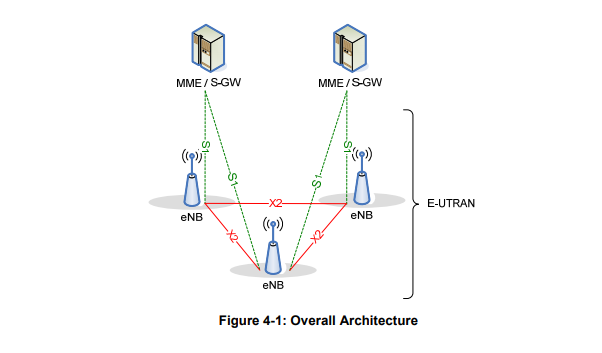
E-UTRAN ARCHITECTURE

The E-UTRAN consists of eNBs:-

  • Providing the E-UTRA user plane (PDCP/RLC/MAC/PHY) and control plane (RRC) protocol terminations towards the UE. 
  • The eNBs are interconnected with each other by means of the X2 interface. 
  • The eNBs are also connected by means of the S1 interface to the EPC (Evolved Packet Core),
  • The MME (Mobility Management Entity) by means of the S1-MME and to the Serving Gateway (S-GW) by means of the S1-U. 
  • The S1 interface supports a many-to-many relation between MMEs / Serving Gateways and eNBs. 


The eNB  functions: - 

  • Radio Resource Management
  • Radio Bearer Control,
  • Radio Admission Control,
  • Connection Mobility Control,
  • Dynamic allocation of resources to UEs in both uplink and downlink (scheduling);
  • Routing of User Plane data towards Serving Gateway;
  • Measurement
  • reporting configuration 
3GPP references- TS 36.300 version 9.6.0 Release 9

Note: Hope you find this information beneficial. If engaged, please share and do not forget to like to us.

LTE E-UTRAN FUNCTIONS AND ARCHITECTURE


E-UTRAN ARCHITECTURE

The E-UTRAN consists of eNBs:-

  • Providing the E-UTRA user plane (PDCP/RLC/MAC/PHY) and control plane (RRC) protocol terminations towards the UE. 
  • The eNBs are interconnected with each other by means of the X2 interface. 
  • The eNBs are also connected by means of the S1 interface to the EPC (Evolved Packet Core),
  • The MME (Mobility Management Entity) by means of the S1-MME and to the Serving Gateway (S-GW) by means of the S1-U. 
  • The S1 interface supports a many-to-many relation between MMEs / Serving Gateways and eNBs. 


The eNB  functions: - 

  • Radio Resource Management
  • Radio Bearer Control,
  • Radio Admission Control,
  • Connection Mobility Control,
  • Dynamic allocation of resources to UEs in both uplink and downlink (scheduling);
  • Routing of User Plane data towards Serving Gateway;
  • Measurement
  • reporting configuration 
3GPP references- TS 36.300 version 9.6.0 Release 9

Note: Hope you find this information beneficial. If engaged, please share and do not forget to like to us.

Wednesday, January 29, 2020

LTE PBCH

LTE Physical Broadcast Channel (PBCH)


  • Physical Broadcast Channel (PBCH) is used to broadcast the Master Information Block (MIB) using the BCH transport channel and BCCH logical channel
  • For both FDD and TDD,
  • the PBCH is allocated the central 72 subcarriers belonging to the first 4 OFDMA symbols of the second time slot of every 10 ms radio frame (time slot 1 in subframe 0, with time slot numbering starting from 0)
  • Reference Signal Resource Elements (including those which would be allocated if antenna ports 0 to 3 were used, irrespective of the actual antenna ports used) are excluded from the PBCH allocation
  •  The PBCH can be broadcast using only antenna port 0, or transmit diversity can be used to broadcast the PBCH using antenna ports {0, I} or {0, I, 2, 3}
Resource Element allocation for the PBCH


normal cyclic prefix:-
  • The PBCH occupies 240 Resource Elements when using the normal cyclic prefix,i.e. (72 x 4)- 48, where 48 is the number of Resource Elements allocated to the Reference Signal.
extended cyclic prefix:-
  • The PBCH occupies 216 Resource Elements when using the extended cyclic prefix, i.e. (72 x 4) - 72, where 72 is the number of Resource Elements allocated to the Reference Signal (in this case, the third column of Reference Signals also overlaps with the set of PBCH Resource Elements)

modulation:-
  • The PBCH uses QPSK modulation so the 240 Resource Elements provide 480 bits when using the normal cyclic prefix, and the 216 Resource Elements provide 432 bits when using the extended cyclic prefix


* 3GPP References: TS 36.211
Note: Hope you find this information beneficial. If engaged, please share and do not forget to like to us.


LTE PBCH

LTE Physical Broadcast Channel (PBCH)


  • Physical Broadcast Channel (PBCH) is used to broadcast the Master Information Block (MIB) using the BCH transport channel and BCCH logical channel
  • For both FDD and TDD,
  • the PBCH is allocated the central 72 subcarriers belonging to the first 4 OFDMA symbols of the second time slot of every 10 ms radio frame (time slot 1 in subframe 0, with time slot numbering starting from 0)
  • Reference Signal Resource Elements (including those which would be allocated if antenna ports 0 to 3 were used, irrespective of the actual antenna ports used) are excluded from the PBCH allocation
  •  The PBCH can be broadcast using only antenna port 0, or transmit diversity can be used to broadcast the PBCH using antenna ports {0, I} or {0, I, 2, 3}
Resource Element allocation for the PBCH


normal cyclic prefix:-
  • The PBCH occupies 240 Resource Elements when using the normal cyclic prefix,i.e. (72 x 4)- 48, where 48 is the number of Resource Elements allocated to the Reference Signal.
extended cyclic prefix:-
  • The PBCH occupies 216 Resource Elements when using the extended cyclic prefix, i.e. (72 x 4) - 72, where 72 is the number of Resource Elements allocated to the Reference Signal (in this case, the third column of Reference Signals also overlaps with the set of PBCH Resource Elements)

modulation:-
  • The PBCH uses QPSK modulation so the 240 Resource Elements provide 480 bits when using the normal cyclic prefix, and the 216 Resource Elements provide 432 bits when using the extended cyclic prefix


* 3GPP References: TS 36.211
Note: Hope you find this information beneficial. If engaged, please share and do not forget to like to us.


3GPP Release 9 – Date 2009

3GPP Release 9 – Date 2009 Release 9 brought a number of refinements to features introduced in Release 8, along with new developments to the...